

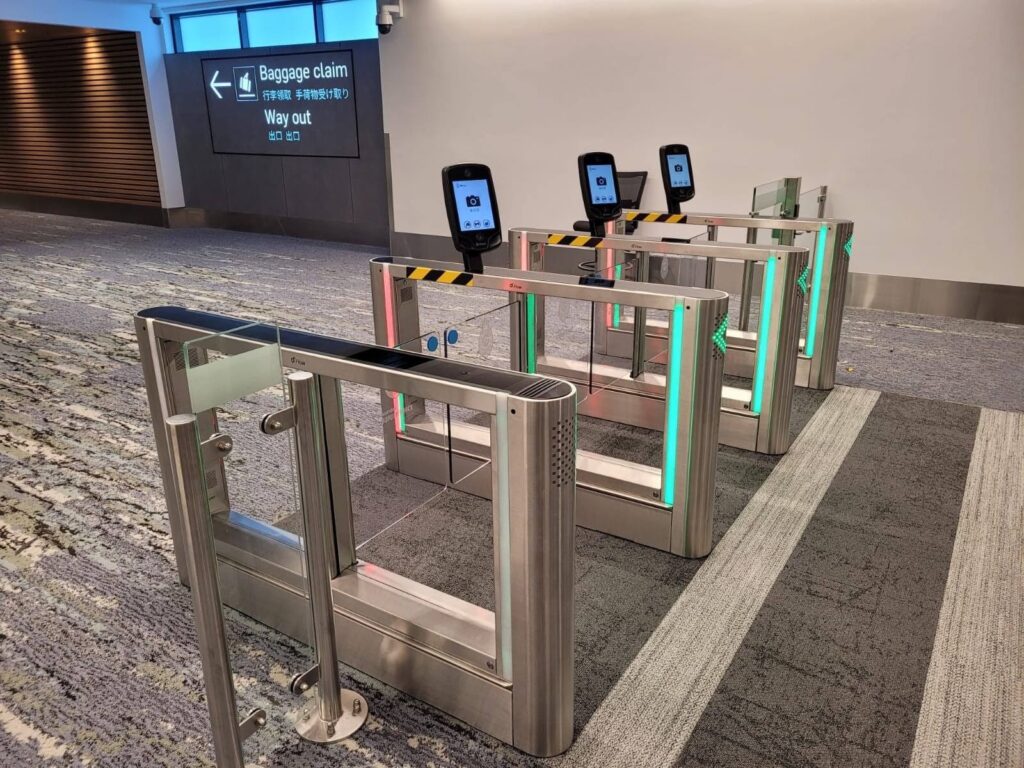
What is biometric access control and how does it work?
Security within buildings and business environments is becoming increasingly important. Traditional keys and access cards are gradually being replaced by smarter and more secure solutions. One of the most advanced solutions is biometric access control..
But what exactly does this mean, how does it work, and why are more and more organizations choosing it? In this blog, we explain it in a clear and practical way.
What is biometric access control?
Biometric access control is a security system that grants access based on unique personal characteristics. Instead of using a key, access card, or PIN code, your identity is verified using something that is uniquely yours.
This can include:
- Fingerprint recognition
- Face recognition
- Iris scanning
- Voice recognition
Because these characteristics are unique to each individual, the system is extremely difficult to deceive. This makes biometric access control one of the safest forms of access management available.

How does biometric access control work?
The technology behind biometric access control is advanced, but using the system is very simple.
The process usually consists of three steps:
1. Registration
First, a biometric characteristic of a user is stored in the system. This could be a fingerprint or facial profile. The data is securely encrypted and stored within the access control software.
2. Verification at the entrance
When someone wants to open a door or gain access, the system scans the biometric characteristic again using a scanner or camera at the entrance.
3. Matching and access
Het systeem vergelijkt de scan met de opgeslagen gegevens. Als er een match is, wordt de toegang verleend en gaat de deur of het toegangssysteem open.
Within seconds, the system determines whether access should be approved or denied.
Why do companies choose biometric access control?
- Higher security
Because your body or face is used as the key, it is extremely difficult to fake or transfer access to someone else.
Bij locaties waar ongeautoriseerd meelopen een risico vormt, is het belangrijk om ook aandacht te besteden aan fysieke afscheiding en detectie. Lees meer over tailgating en piggybacking voorkomen.
- No physical keys or access cards required
Employees no longer need to carry keys or badges. This makes the system both more secure and more user-friendly.
- Fast and efficient access
A biometric scan takes only a fraction of a second, allowing people to move smoothly through entrances, even during busy periods.
- Less management and administration
There is no need to manage lost cards or physical keys. Everything is handled digitally within the system.
The future of access control
Biometric access control is expected to become increasingly standard in modern buildings over the coming years. Especially when combined with cloud-based systems, mobile access, and smart building management, it creates a fully integrated security solution.
Where traditional keys were once the standard, the market is now shifting towards personal and digital identification.
Need advice or request a quote directly?
Would you like to know which access solution best fits your situation? Or are you looking for a concrete price indication for your project? Geran Access Products is happy to think along with you and translates your requirements into a practical and reliable solution.
Request a quote and receive a proposal that is fully tailored to your location, use, and required security level. Prefer to get advice first? Feel free to Contact us, we will help you quickly and effectively.
Frequently asked questions
Yes, modern facial recognition systems often use infrared technology, allowing them to function effectively in low-light conditions or dark environments.
Many biometric access control systems can be connected to backup power supplies or fail-safe solutions to ensure entrances continue operating safely during a power outage.
Absolutely. Many modern systems can be centrally managed, allowing companies to control multiple locations from a single platform.
In general, modern biometric systems require very little maintenance. Regular software updates and occasional cleaning of scanners are usually sufficient.
Ja, biometrische lezers worden vaak geïntegreerd met speed gates, tourniquets en andere fysieke toegangsoplossingen voor extra beveiliging en gecontroleerde doorgang.