

Speed Gate or Access Gate: What is the difference?
When looking for an access control solution, you will quickly come across two commonly used systems: the speed gate and the access gate. While they may seem similar, each has its own function, advantages, and areas of application. In this blog, we explain the differences in a clear and practical way, helping you determine which solution best suits your location.
For organizations in industries such as manufacturing, logistics, government, and events, understanding this distinction is important. The right choice directly impacts security, efficiency, and visitor flow.
What Is an Access Gate?
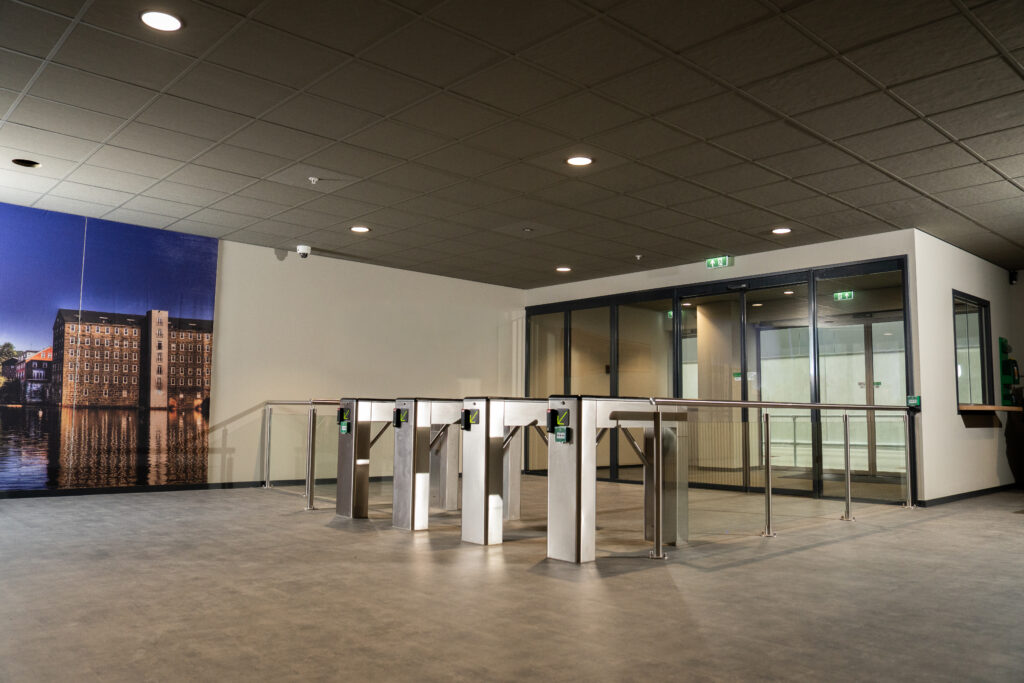
A access gate is a compact and user-friendly form of pedestrian access control. It is commonly used in locations where speed, visibility, and ease of use are important. Examples include gyms, office buildings, retail stores, and swimming pools.
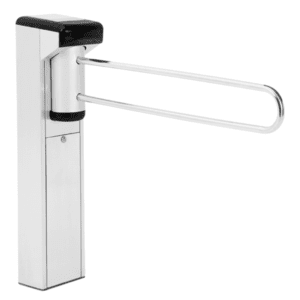
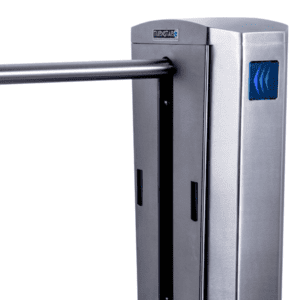
An access gate is typically a waist-high solution that allows people to pass through one at a time. The system can be integrated with access control technologies such as card readers, QR scanners, or even biometric identification. Once a user is authorized, the gate opens and the person can proceed.
The main advantage of an access gate is the balance between control and smooth pedestrian flow. People can pass through quickly while you still maintain control over who enters the premises.
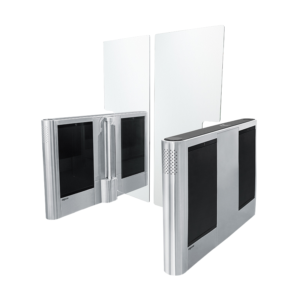
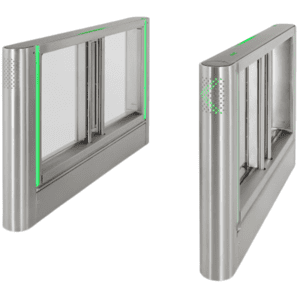
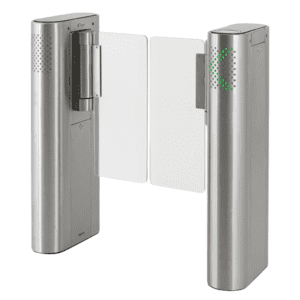
What Is a Speed Gate?
A speed gate gaat een stap verder in beveiliging. Dit systeem bestaat meestal uit twee deuren die nooit tegelijkertijd openstaan. Hierdoor wordt het zogenaamde “tailgating” – het meeliften van onbevoegde personen – effectief voorkomen.
Tip: lees ook onze blog over tailgating
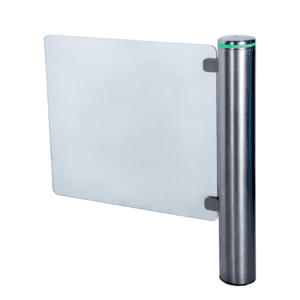
The dFlow speed gate works slightly differently. This model features doors that remain open by default, giving the gate a more welcoming and aesthetic appearance. The doors only close when an unauthorized user is detected inside the lane and reopen once the person moves away from the barriers.
Speed gates are often installed in locations with higher security requirements, such as data centres, laboratories, government buildings, and industrial facilities. They are also commonly used in environments where sensitive information or valuable assets need to be protected.
The most important feature of a speed gate is that only one person can pass through at a time, and only after successful authorization. This creates a highly controlled and secure passage.
Key Differences Between a Speed Gate and an Access Gate
Although both systems are designed for access control, the main differences lie in the level of security and the intended application.
An access gate mainly focuses on:
- Smooth flow control
- Ease of use
- Basic to medium-level access control
- Public or semi-public environments
A speed gate mainly focuses on:
- Maximum security
- Prevention of tailgating
- Strict one-person access control
- High-security environments
In simple terms, an access gate is ideal for efficiency and convenience, while a speed gate is primarily designed for safety and strict control.
Which Solution Fits Your Situation?
The choice between a speed gate and an access gate depends entirely on the environment and the required level of security.
Do you operate a location where large numbers of people need to enter quickly, such as a gym or retail store? Then an access gate is often the best choice. It ensures smooth throughput while maintaining controlled access.
However, if you work in an environment where security is the top priority and unauthorized access must be prevented at all costs, a speed gate is the better solution.
In some cases, both systems are even combined within the same building. For example, an access gate may be used for general visitors, while a speed gate secures staff-only or high-security areas.
The difference between a speed gate and an access gate mainly lies in the level of security and the intended application. While an access gate is designed for speed and user convenience, a speed gate provides maximum control and security.
By carefully assessing the needs of your location, you can choose the right solution and create an access control setup that is both efficient and secure.
At Geran Access Products, we are happy to help you find the right solution for your specific situation.
Need advice or request a quote directly?
Would you like to know which access solution best fits your situation? Or are you looking for a concrete price indication for your project? Geran Access Products is happy to think along with you and translates your requirements into a practical and reliable solution.
Request a quote and receive a proposal that is fully tailored to your location, use, and required security level. Prefer to get advice first? Feel free to Contact us, we will help you quickly and effectively.
Frequently asked questions
An access gate helps reduce unauthorized entry, while a speed gate fully prevents tailgating by allowing only controlled single-person passage.
Yes, both systems can be integrated with access control systems such as card readers, QR scanners, and biometric verification.
Yes, this is very common. For example, an access gate can be used for general visitors, while a speed gate secures staff-only or high-security areas.
An access gate is ideal for locations where large numbers of visitors need to move through quickly, such as gyms, retail stores, and swimming pools. It offers a good balance between ease of use and access control.
A speed gate is mainly used in environments with higher security requirements, such as data centres, government buildings, and office buildings. In these environments, maximum control over every individual entry is essential.